Sunday, March 22, 2009
At Bertram's Hotel by Agatha Christie
Just realised I forgot to review At Bertram's Hotel! Read this a couple of weeks ago. A Miss Marple mystery - fun to retreat into!


Colour Bar by Susan Williams
On Saturday, I finished a book that moved and inspired me. I had not known the story of Seretse Khama, who became Botswana's first President, and his white English wife, Ruth, but their story is one that has made me feel almost ashamed to be British, but also inspired by those who stood up for Seretse and Ruth as they faced many struggles.
Seretse Khama was the next Kgosi (Chief) of his tribe, the Bamangwato, and as he grew up and studied in England, his uncle, Tshekedi, acted as Regent. The tribe would have been looking forward to Seretse's return, and Seretse would no doubt have been a footnote in Botswana's history, were it not for the fact that while in England he fell in love with a white woman, Ruth Williams (no relation to the author). To marry someone without first consulting the tribe was shocking enough, but to marry a white woman at the time when Bechuanaland's neighbour, South Africa, was marching towards apartheid, was asking for trouble. At first interested parties from Tshekedi and the British government, to the London Missionary Society, tried to stop the wedding from going ahead; once Seretse and Ruth had managed to marry - at a Registrar's rather than the church wedding they had planned - people and events conspired against them to try to stop Seretse becoming Kgosi and setting a certain example in southern Africa.
It did not take long for the Bamangwato to welcome Ruth as their "Mother" - Mohumagadi. However, South Africa intervened with the British colonial authorities, advising that allowing Seretse to become Chief could cause unrest. Seretse was eventually exiled from his country for about five years or so.
This book is full of detail, describing the fight for justice. However, it was easy to read, and very moving. When the Bamangwato pleaded with the British government for their Kgosi to come back, and they were refused, I felt partly responsible. When violence erupted at the Kgotla, I felt angry that the tribe had been pushed into that position. I felt proud of those in the UK, like Tony Benn, who campaigned on the Khamas' behalf. I felt challenged - would I have been preprared to stand up, or would I have simply gone along, unthinking, with the status quo? When the Khamas were finally allowed to return home, I was sitting in the tube about to arrive at King's Cross with tears in my eyes.
I started on Monday, and finished the book on Saturday morning. It was a busy week, I could only read during my journeys, when I had a seat. For a 330 page book with small print, that was quite quick. I highly recommend this book. Even if you have never before shown any interest in Botswanan, or even African, or colonial, politics. This is a human story - that reveals so many other facets of British history at the same time.
Seretse Khama was the next Kgosi (Chief) of his tribe, the Bamangwato, and as he grew up and studied in England, his uncle, Tshekedi, acted as Regent. The tribe would have been looking forward to Seretse's return, and Seretse would no doubt have been a footnote in Botswana's history, were it not for the fact that while in England he fell in love with a white woman, Ruth Williams (no relation to the author). To marry someone without first consulting the tribe was shocking enough, but to marry a white woman at the time when Bechuanaland's neighbour, South Africa, was marching towards apartheid, was asking for trouble. At first interested parties from Tshekedi and the British government, to the London Missionary Society, tried to stop the wedding from going ahead; once Seretse and Ruth had managed to marry - at a Registrar's rather than the church wedding they had planned - people and events conspired against them to try to stop Seretse becoming Kgosi and setting a certain example in southern Africa.
It did not take long for the Bamangwato to welcome Ruth as their "Mother" - Mohumagadi. However, South Africa intervened with the British colonial authorities, advising that allowing Seretse to become Chief could cause unrest. Seretse was eventually exiled from his country for about five years or so.
This book is full of detail, describing the fight for justice. However, it was easy to read, and very moving. When the Bamangwato pleaded with the British government for their Kgosi to come back, and they were refused, I felt partly responsible. When violence erupted at the Kgotla, I felt angry that the tribe had been pushed into that position. I felt proud of those in the UK, like Tony Benn, who campaigned on the Khamas' behalf. I felt challenged - would I have been preprared to stand up, or would I have simply gone along, unthinking, with the status quo? When the Khamas were finally allowed to return home, I was sitting in the tube about to arrive at King's Cross with tears in my eyes.
I started on Monday, and finished the book on Saturday morning. It was a busy week, I could only read during my journeys, when I had a seat. For a 330 page book with small print, that was quite quick. I highly recommend this book. Even if you have never before shown any interest in Botswanan, or even African, or colonial, politics. This is a human story - that reveals so many other facets of British history at the same time.
Friday, March 20, 2009
Ruby Red by Linzi Glass
My other train book, this is a story of a girl growing up in South Africa during apartheid, whose mother runs an art gallery that sells works by black artists on the wrong side of Sandton. Ruby herself has to face prejudice and discrimination when her British South African friends, and her parents, become unhappy with her relationship with an Afrikaner. A story about breaking down boundaries is tied up with the riots that resulted in the death of Hector Peterson and other children who were campaigning about the new law that meant they had to be educated in Afrikaans. Some very moving scenes in the book.
I had not realised that the book would feature this scene: however, reading it reminded me of the time I met Hector Peterson's mother at an open air art gallery in Soweto a number of years ago.
Another good read; thoughtful and moving.
I had not realised that the book would feature this scene: however, reading it reminded me of the time I met Hector Peterson's mother at an open air art gallery in Soweto a number of years ago.
Another good read; thoughtful and moving.
The View From Saturday by E.L. Konigsburg
I wanted a nice, easy, feelgood read as I travelled north by train for a weekend visit to my auntie. Popped into the school library just before the end of the day, as the librarian was packing up for the night, so had to grab a couple of books, with only the covers for inspiration. So I picked up two, and I am delighted to say both fulfilled the categories I was hoping for.
The View From Saturday reminded my of a book I have not read, which has been made into a film I have not seen: Slumdog Millionaire. The conceit of the book is the final of a national student quiz competition. The question is asked, then one of the four main character tells a story that reveals how they know the answer. The lives of the four eleven year olds in the story are gradually revealed to be intertwined, and the Year 6 school quiz team seems to be brought together through either serendipity, fate or magic.
Very enjoyable and easy read. I also learnt about turtles ...
The View From Saturday reminded my of a book I have not read, which has been made into a film I have not seen: Slumdog Millionaire. The conceit of the book is the final of a national student quiz competition. The question is asked, then one of the four main character tells a story that reveals how they know the answer. The lives of the four eleven year olds in the story are gradually revealed to be intertwined, and the Year 6 school quiz team seems to be brought together through either serendipity, fate or magic.
Very enjoyable and easy read. I also learnt about turtles ...
Thursday, March 12, 2009
The Sound of Laughter - Peter Kay
I picked this up looking for some easy reading a few nights ago. At first I felt the writing was fairly pedestrian, with a few corny jokes thrown in. However, I was soon laughing out loud at some of the stories despite myself - I wasn't always able to get across the humour to H though! You have to read it for yourself. Overall a book that made me laugh in many places, even if the writing wasn't as sparkling as other books I have read.
Monday, March 09, 2009
The World's Wife by Carol Ann Duffy
It's a long time since I read poetry. It's even longer since I read a poetry book in one day. And I'm not sure if I've ever enjoyed a book of poetry so much.
The thirty poems in this book take well known tales (or at least tales that should be well-known; I'm not convinced many of my pupils would know them all) that have traditionally been told from the male point of view, and, well, not exactly retell the stories from the wives' points of view, but give a different viewpoint anyway. I particularly liked the brevity of Mrs Darwin, but the poignancy of Anne Hathaway, writing about her and Shakespeare's second best bed, was beautiful; Mrs Faust made me laugh out loud (even though I've never read the original: I knew enough to know that she was insightful here) and Mrs Icarus raised a smile.
I read a number of poems to H in bed; he wasn't too keen at first to hear them, and thought that one would be enough; however, he let me read four or five of them and enjoyed them too. I enjoyed being able to read them out loud, to hear the rhythm, rhyme and assonance.
I had heard of this book before; it had come highly commended by a friend - I can't remember by whom. I would highly recommend it myself. And I would be interested in reading more of Duffy's poetry. Go on - give it a go!
The thirty poems in this book take well known tales (or at least tales that should be well-known; I'm not convinced many of my pupils would know them all) that have traditionally been told from the male point of view, and, well, not exactly retell the stories from the wives' points of view, but give a different viewpoint anyway. I particularly liked the brevity of Mrs Darwin, but the poignancy of Anne Hathaway, writing about her and Shakespeare's second best bed, was beautiful; Mrs Faust made me laugh out loud (even though I've never read the original: I knew enough to know that she was insightful here) and Mrs Icarus raised a smile.
I read a number of poems to H in bed; he wasn't too keen at first to hear them, and thought that one would be enough; however, he let me read four or five of them and enjoyed them too. I enjoyed being able to read them out loud, to hear the rhythm, rhyme and assonance.
I had heard of this book before; it had come highly commended by a friend - I can't remember by whom. I would highly recommend it myself. And I would be interested in reading more of Duffy's poetry. Go on - give it a go!
Tuesday, February 24, 2009
Blue Shoes and Happiness by Alexander McCall Smith
Another diverting look at life for the No 1 Ladies' Detective Agency. Borrowed from Mum, I have finished this in a couple of days on the tube. A nice relaxing way to recover from a day of teaching.
Wednesday, February 11, 2009
The Girl Who Married A Lion by Alexander McCall Smith
I am trying to make my way through The Life of Teresa of Avila by Herself. It's pretty tough going; although the writing is fairly straightforward, it is quite dense in places, and probably more suited to quiet contemplation than busy tube journeys. So I decided to ask our school librarian for something a bit lighter and easier, and this is what she recommended.
I have read quite a few African folk tales before, and these tales, rewritten and compiled by Alexander McCall Smith (with a "foreward by Mma Ramotswe"), and these were very much in line with my previous incursions. Each story is about five pages long - some much shorter, occasionally a bit longer. Some examples of final lines (I won't tell you which stories they are from, so it won't spoil your enjoyment):
They are hardly morals of the tale, but they are quite humorous, and I have enjoyed reading them. And now - back to St Teresa.
I have read quite a few African folk tales before, and these tales, rewritten and compiled by Alexander McCall Smith (with a "foreward by Mma Ramotswe"), and these were very much in line with my previous incursions. Each story is about five pages long - some much shorter, occasionally a bit longer. Some examples of final lines (I won't tell you which stories they are from, so it won't spoil your enjoyment):
The people said that the uncles should be killed. And so this happened.
Later, when he was chief, the short boy grew taller.
"Your sons are not lions," the uncle said to the boys' mother. "I am glad," she said.
They are hardly morals of the tale, but they are quite humorous, and I have enjoyed reading them. And now - back to St Teresa.
Sunday, January 25, 2009
The Fire Gospel by Michel Faber
Interesting little novel about a Canadian Aramaic scholar, Theo, who finds some hidden papyrii in an Iraqi museum, which, when translated, contain letters from an eyewitness to the crucifixion of Jesus.
There is a lot of humour in the book, particularly near the beginning in the translations. It is also interesting to read about how Theo gets on with publishing his first book ... haggling over the advance, being interviewed by the media in order to fit into a certain number of minutes, book readings and, especially, looking up his ranking and reading the reviews on Amazon. Familiar territory.
My one criticism would be that the story seems to fizzle out a bit at the end, and the importance of the Fifth Gospel in the world is left in some doubt - and what about its effects on Theo? A short read, started last night, finished today after haggis, and a Christmas present for H from Mum.
Now, what should I read next?
There is a lot of humour in the book, particularly near the beginning in the translations. It is also interesting to read about how Theo gets on with publishing his first book ... haggling over the advance, being interviewed by the media in order to fit into a certain number of minutes, book readings and, especially, looking up his ranking and reading the reviews on Amazon. Familiar territory.
My one criticism would be that the story seems to fizzle out a bit at the end, and the importance of the Fifth Gospel in the world is left in some doubt - and what about its effects on Theo? A short read, started last night, finished today after haggis, and a Christmas present for H from Mum.
Now, what should I read next?
Wednesday, January 21, 2009
Dreams From My Father by Barack Obama
As I finished this book on the tube, reading about a young man sitting weeping between the graves of his father and grandfather, elsewhere in the world, that same young man, slightly older now, was being sworn in as the 44th President of the United States of America.
I am glad that I read this book; I am glad that the young man who wrote it was elected back in November and is now in the White House. Barack Obama's public life makes sense, reading about his early private life. When his Kenyan family are mentioned in the news, they conjure up the images from the book, and I feel as if I almost know them.
I would highly recommend this book, to anyone who enjoys autobiographies, and to anyone who wants to know more about the "most powerful man in the world".
I am glad that I read this book; I am glad that the young man who wrote it was elected back in November and is now in the White House. Barack Obama's public life makes sense, reading about his early private life. When his Kenyan family are mentioned in the news, they conjure up the images from the book, and I feel as if I almost know them.
I would highly recommend this book, to anyone who enjoys autobiographies, and to anyone who wants to know more about the "most powerful man in the world".
Friday, January 09, 2009
Reading in 2008
So I apparently only managed to finish 25 books in 2008, three down from my 2007 total. I am sure I managed more than that, but never got round to writing the reviews!! So here they are, in reverse order:
- 25. Tales of Beedle the Bard - JK Rowling
- 24. The Bluest Eye - Toni Morrison
- 23. The Tailor King - Anthony Arthur
- 22. Two Caravans - Marina Lewycka
- 21. When A Crocodile Eats the Sun - Peter Godwin
- 20. Fearless Fighter - Vera Chirwa
- 19. The Freedom Writers Diary - Erin Gruwell
- 18. Don't Let's Go To The Dogs Tonight - Alexandra Fuller
- 17. The Boy in the Striped Pyjamas - John Boyne
- 16. Apache: Girl Warrior - Tanya Landman
- 15. Mukiwa: A White Boy in Africa - Peter Godwin
- 14. A Long Way Gone - Ishmael Beah
- 13. The Raphael Affair - Iain Pears
- 12. Boy - Roald Dahl
- 11. The Reluctant Fundamentalist - Mohsin Hamid
- 10. The Medici Secret - Michael White
- 9. Fallen Gods - Quintin Jardine
- 8. The Immaculate Deception - Iain Pears
- 7. Misadventure in the Middle East - Henry Hemming
- 6. Mister Pip - Lloyd Jones
- 5. Not Without My Sister - Kristina, Juliana and Celeste
- 4. On Chesil Beach - Ian McEwan
- 3. The Five People You Meet in Heaven - Mitch Albom
- 2. The Gathering - Anne Enright
- 1. My Booky Wook - Russell Brand
Song of Solomon by Toni Morrison
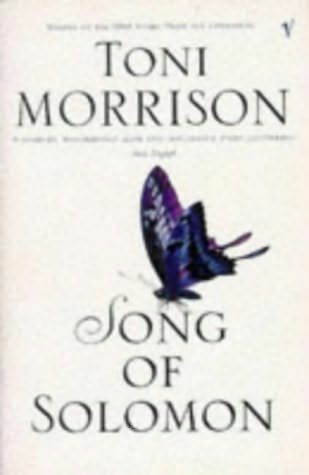
An enforced retiral to the tube has meant that I have been able to finally finish Toni Morrison's Song of Solomon. I started this shortly after finishing The Bluest Eye, but, as I predicted at the time, it was a while before I had time in which to really get into and enjoy this book. However, what a treat it has been. Magical, mystical and mysterious. The story seems to go back and forth without due care to chronology, and then comes together in a satisfying way towards the end, dealing with identity, memory and family. I would definitely recommend this book.
Subscribe to:
Posts (Atom)
